


Aisoncore
Mining companies · Repairs as a Service

The component has left site. The responsibility is still yours.

We're with you through every component repair, end to end: a platform, agents and a dedicated coordinator who activate orders, clear the waits and measure the time and cost of every stage, alongside your team and your repair centres.

6,000+
repairs managed
up to 40%
less time off site
340+
repair centres, technical inspectors (ITOs) and carriers in Aisoncore Network

Source: Aisoncore data. The 40% is from Candelaria: it compares 2019–2022 with 2023, its first full year with Aisoncore.

The problem

Your repair process has four owners, and none of them sees all of it.

Procurement approves the spend. Maintenance needs the component. Logistics moves it. Finance answers for the inventory. Each one sees their own part, in their own system.

more than 60%
of repair time goes on administration.
108.7
days of repair time on average.
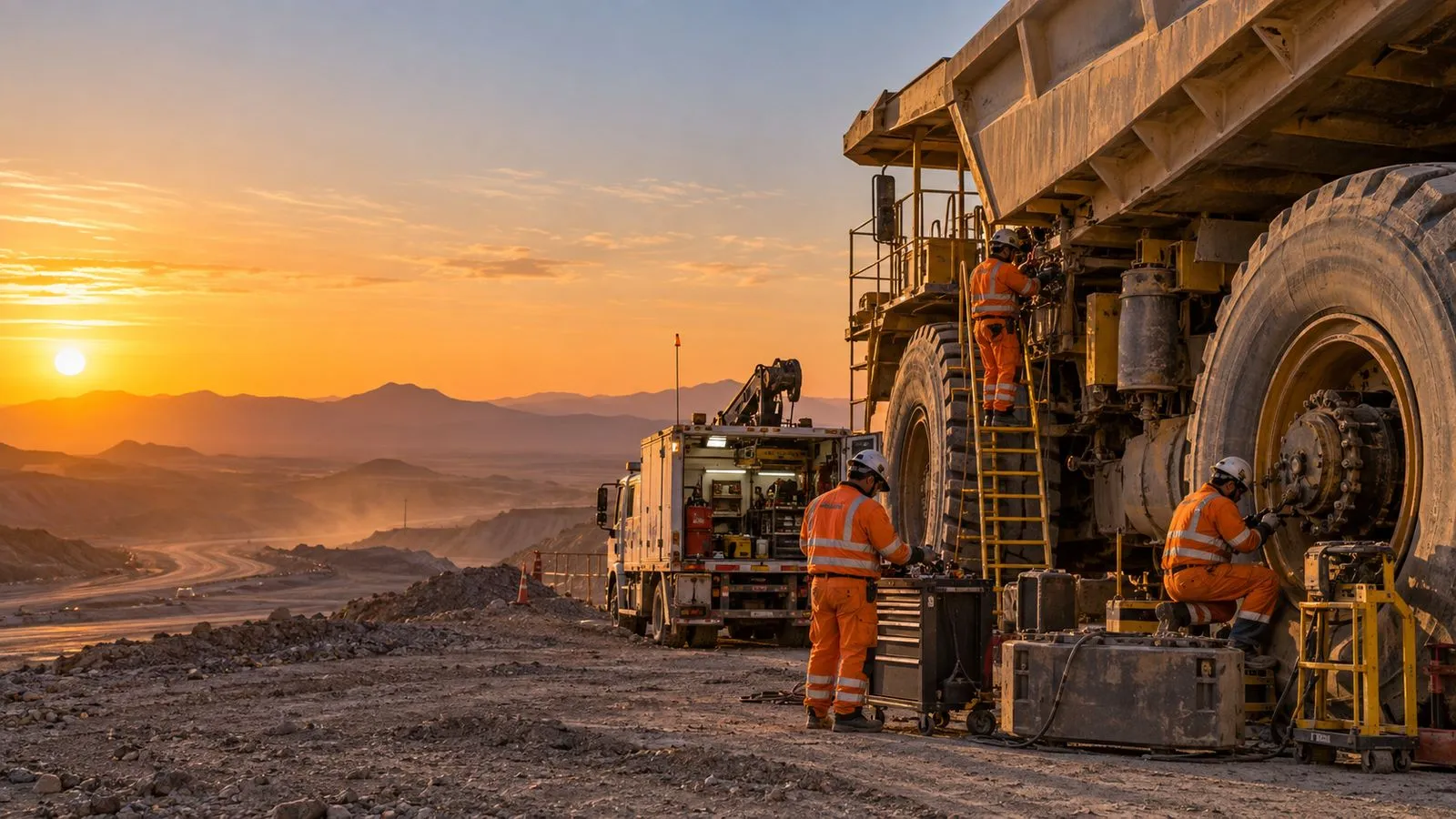
Maintenance supervisor with a tablet in front of a haul truck on site
Procurement

The additional work was approved on WhatsApp. The paperwork comes later.

You regularise additional work after it's already been done. You reassign providers without performance data for each repair centre. And the penalty never gets applied, because nobody can prove who caused the delay.

Maintenance

SAP says available. The warehouse says otherwise.

The component is back, but it hasn't been released, the inspector left an observation, or it's waiting for additional work to be approved. To find out where it's at, you chase the repair centre on WhatsApp. And the PO Delivery Date doesn't tell you when it's coming back.

Read (in Spanish): does the PO Delivery Date tell you when it comes back? →
Logistics

Dispatched in the system. In reality, still sitting in the yard.

Dispatches and returns are coordinated by phone and email. Dispatch notes arrive later, some dispatches never get recorded, and nobody knows how many components are waiting for pickup at a repair centre.

Finance

You have assets in third-party hands that you can't see.

You don't know which components are at repair centres today, or since when. Inventory gets bought just in case. And the savings being reported have no ledger account to back them up.

A component's end-to-end cycle

ILLUSTRATIVE EXAMPLE
  1. 01
    Removal
    Maintenance
  2. 02
    Dispatch
    Logistics
  3. 03
    Assessment and quote
    Repair centre
  4. 04
    Approval
    Procurement
    The wait builds up here
  5. 05
    Repair and inspection
    Repair centre and inspector
  6. 06
    Return and installation
    Logistics and Maintenance

Time is lost between stages, not on the repair bench: quotes waiting for review, additional work not yet approved, inspections with no date. Approval is where most of it builds up, and nobody measures it.

Stage closedStopped herePending
See what changes for each area
Repairs as a Service

We run it with you, with evidence for every area.

A platform, agents and a dedicated coordinator. The agents activate orders, send reminders and escalate. The coordinator calls when something gets stuck. We operate with the mining company, not instead of it: each area gets what it needs to make decisions.

Procurement

Every piece of additional work backed up, before you approve it.

Base quote, additional work and technical backup in a single file per order.
Approval stays in your SAP or Ariba. We gather the evidence and push for an answer.
You see how long each repair centre takes and why, with evidence from both sides. If the wait was on the mining company, that gets recorded too.
The proof
A sample of the provider performance report.

Days per stage, causes of delay, and how many days fall on the mining company and on each repair centre. With that you decide whether to keep or reassign a provider.

How we work with your operation

  1. STEP 1
    Diagnostic and signed-off baseline
    We measure your current process with Procurement, Maintenance, Logistics and Finance, using data from your ERP. We sign off the baseline before we start.
  2. STEP 2
    Roll-out with your network
    We connect your repair centres, inspectors and carriers to the same process, with your operation's rules.
  3. STEP 3
    Daily operation
    The agents activate, remind and escalate. Your coordinator calls when something gets stuck.
  4. STEP 4
    Review against the baseline
    Every week, blockers and alerts. Every month, a month-end report. Every quarter, results against the baseline.
SAP integration
We take the orders from your ERP. Approval stays where it is today.
You can start without integration
We start with extracts from your ERP and integrate when your IT team is ready.
Your data, exportable
The data belongs to your operation. Export it whenever you like.
ISO 27001
Information security under the ISO 27001 standard.
Our rule

Every finding goes to the area involved first. We attribute waits; we don't look for someone to blame.

I want this for my operation
Coming soon

Exchange model: get money back for your used or damaged component.

A damaged component sitting in the warehouse is money standing still. In an exchange you hand it over and get one that's ready to run. We're building the model with mining companies and repair centres; for now, this is the outline.

  • TodayThe damaged component waits in the warehouse or the workshop, and gives you nothing back.
  • With an exchangeYou hand it over, receive one ready to run, and get money back for the one you handed over.
Run component exchanges? Let's talkLaunch date to be confirmed.
Impact

Candelaria started with a pilot. Lundin took it to Caserones.

Lundin MiningAisoncore
Candelaria case · Lundin Mining

Lundin Mining started with a pilot at Candelaria in 2022. Working with local repair centres, we tracked more than 2,000 repairs, and time off site fell by up to 40%. In 2025, Lundin took Aisoncore to Caserones.

2,000+
repairs tracked
up to 40%
less time off site
2022 → 2025
from pilot at Candelaria to Caserones

“Candelaria's experience with Aisoncore allowed us to track every stage of the repair process in detail, and to reduce both operational and administrative process times.”
Patricio Valencia, Deputy Manager, Purchasing and Materials Engineering, Lundin MiningTranslated from Spanish.
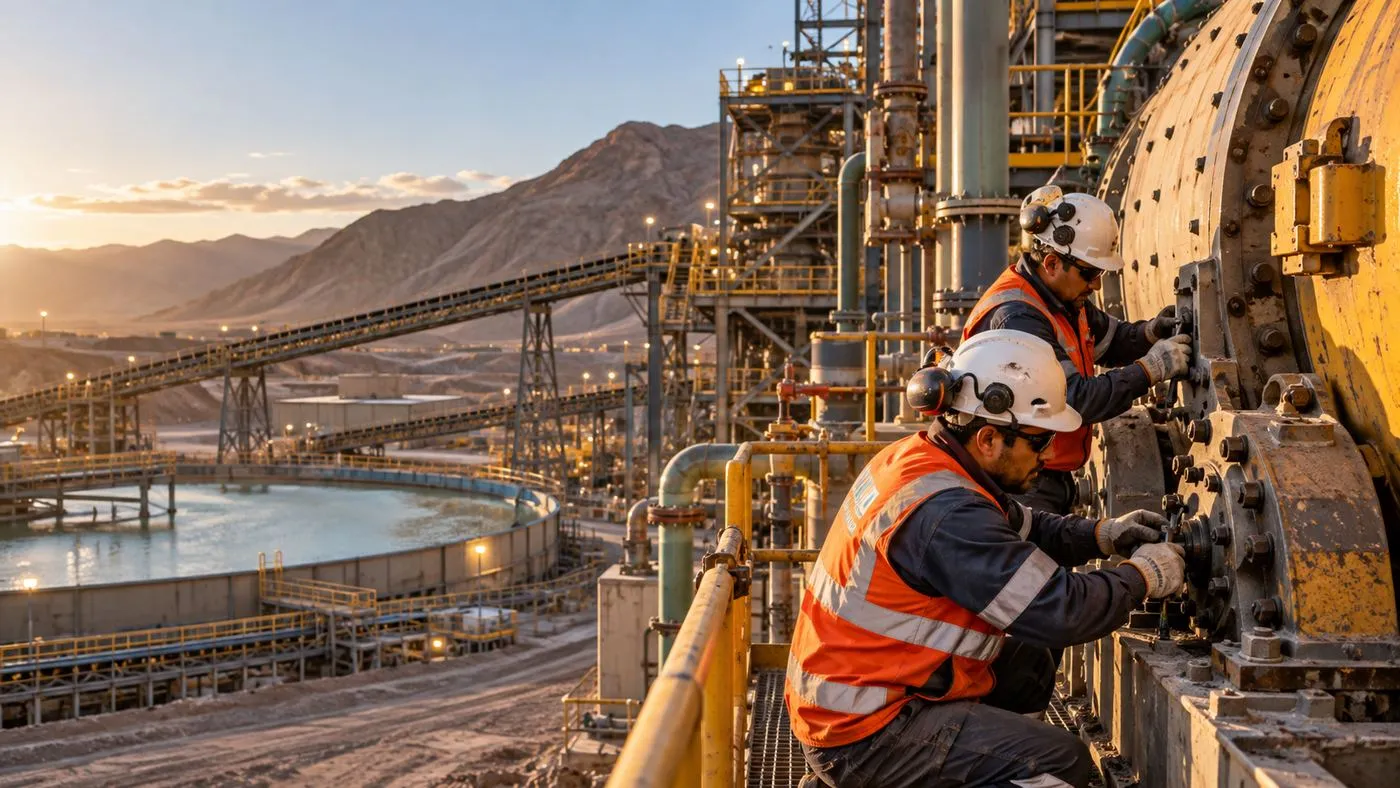
Two technicians adjusting a mill at a concentrator plant, with thickeners and conveyors in the background
6,000+
repairs managed
up to 40%
less time off site
20%
more local repairs
56%
lower emissions from repairing vs. buying new
ENVIRONMENTAL IMPACT

Source: Aisoncore data. 40%: Candelaria, 2019–2022 compared with 2023, its first full year with Aisoncore. 56%: Aisoncore in-house study 2022–2023, published in Reporte Minero, Mar 2024.

See the Candelaria case →

Let's see where your process loses time.

In the diagnostic, we measure your process with your data and show you where the waits are and who has the next action.

Book a diagnosticAre you a repair centre? →