One of the industries that has undergone the most transformations in recent years is mining. These changes, both strategic (mergers, discoveries, explorations) and internal (processes and technological innovation), have given rise to "mining 4.0", where all areas are connected and have a significant impact.
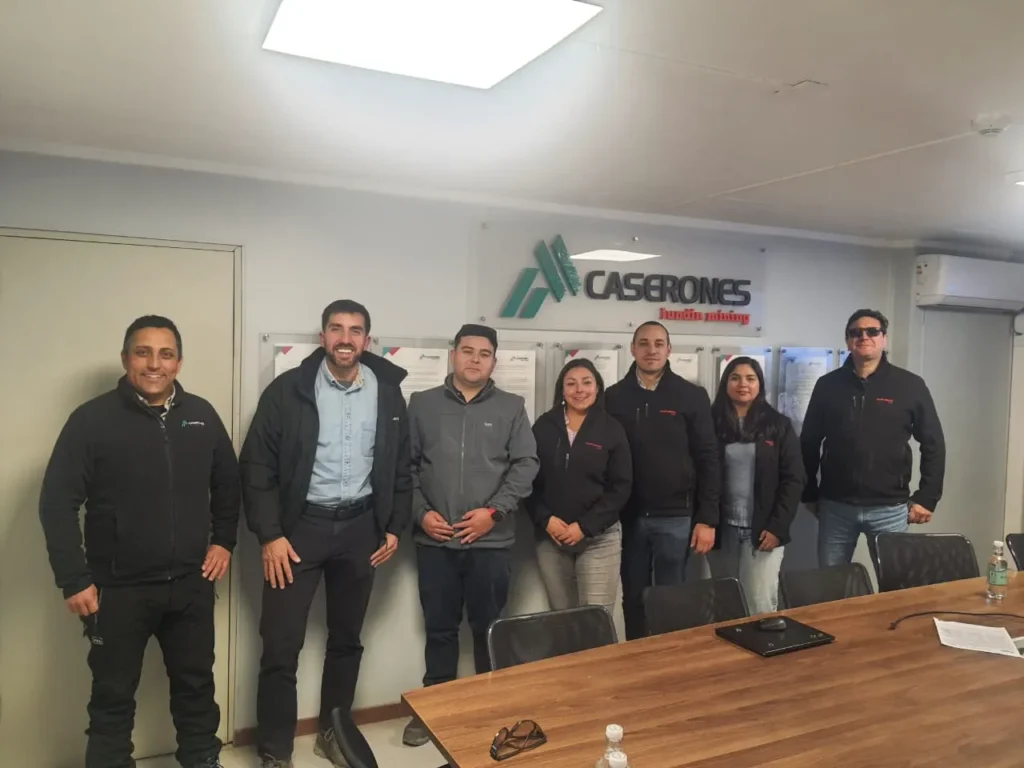
At Aisoncore, we have observed that Maintenance and Supply Chain have become key players in this transformation, either with strategies that drive operational efficiency and promote the circular economy. To discuss this and to know what will mark this 2025 we wanted to talk to one of our clients, Patricio Valencia who is Assistant Manager of Purchasing and Materials Engineering at Lunding Mining Chile.
Synergy between governance, suppliers and cost optimization
Looking ahead to 2025, one of the first things we think about when making an annual projection is the mining industry's focus on growth, trying to maintain a healthy cost balance. For the maintenance areas, Patricio Valencia believes that one of the most important points is the capacity of mining companies to generate long-term agreements with key suppliers. " We look for synergies to achieve optimization and cost reduction, but also to take better advantage of the technical support services offered by specialized suppliers," he says. He clarifies that this approach not only seeks to reduce costs, but also to improve operational efficiency through the consolidation of strategic relationships with them.
However, this synergy is not without its challenges, one of the main ones being the implementation of technology to streamline processes, in direct coordination with suppliers.
In Valencia's words, "Today people use technology, we are familiar with it, and the challenge is no longer in the technological tool. The real challenge is in the governance of these tools and in training".
According to him, many times the lack of coordination or lack of collaboration between the maintenance and supply chain areas can slow down the progress of key projects. "If there is no collaboration, nothing can be implemented," he emphasizes.
This is particularly relevant in a context where technological solutions are advancing rapidly, but require proper integration into daily processes. Looking ahead to 2025, the focus will be on strengthening clear, defined leadership and ensuring that both technical staff and decision-makers are trained to maximize the use of these tools.
Specialization + AI, Key to Mining in the Future
Another trend that Valencia identifies is the growing need for specialization within the Maintenance and Supply Chain area. "We are taking a step further, where professionals in the area are becoming specialists in technical areas such as mechanics or metallurgy," Valencia mentions. He believes that this specialization is necessary to develop better relationships and will allow the Supply team to make a more direct contribution to the operational and maintenance areas, which will facilitate the implementation of new technologies and innovative solutions.
In line with this, an ASCM trend report reveals that Artificial Intelligence will also be one of the key points for the Supply Chain this year, being applied with greater emphasis to make more efficient purchasing and logistics planning in Supply Chain, but also to help generate synergy between the eventual needs of the Maintenance areas and each of its sub-specialties.
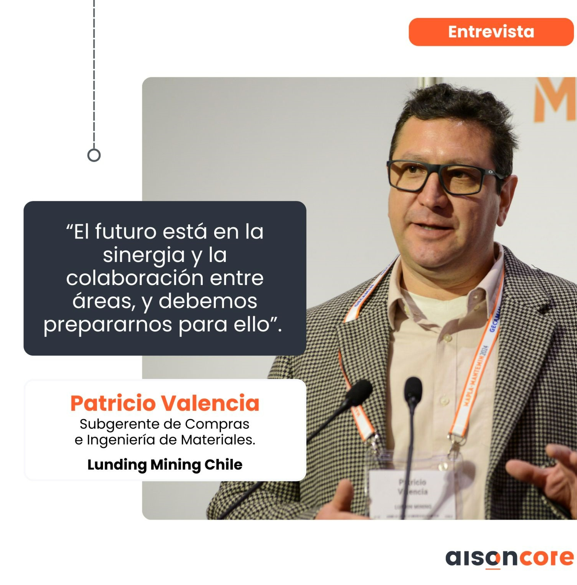
"the future lies in synergy and collaboration between areas, and we must prepare for it". Patricio Valencia.
Circular Economy and Energy Efficiency
Another focus for mining worldwide is the focus on the Circular Economy. In recent years, the measurement of emissions has become a strategic axis of all operations, and ESG has become the top 5 strategic focus for global mining according to the latest study by EY. Valencia also highlights the importance of integrating concepts such as circular economy and energy efficiency in the work plans towards 2025. In this sense, he states: "These aspects, which go beyond the immediate monetary benefits, represent a step towards a more sustainable and responsible approach within the mining industry".
Looking ahead to 2025, the areas of maintenance and supply chain in Chilean mining face significant challenges but also clear opportunities. From governance and technical specialization to collaboration with suppliers and the implementation of technologies, the key will be to integrate solutions that improve efficiency without losing sight of sustainability. As Valencia finally mentions, "the future lies in synergy and collaboration between areas, and we must prepare for this.

By Bastian Andres Varas Michea
The adoption of technologies in the mining sector has evolved and taken on different perspectives in recent years. Today, it is a topic that aims not only to improve operational efficiency but also to address environmental and social concerns, making mining more responsible and sustainable.
In this article, we'll discuss how technology can play a crucial role in adapting and improving the repair process in the mining sector, covering its various aspects and implementing it.

This year, as part of our commitment to optimizing component repair processes, we set out to improve the usability of our solution, Aisoncore. And after hard work involving our entire team and greatly enriched by valuable feedback from our customers, version 2.0 was born.
What did we discover on this path of digitalization, efficiency, and usability? In this article, we share the main changes we implemented and the improvements we've achieved, which we will officially present at our next launch event .

At Aisoncore , our journey began with a bold vision: to change the game in traceability of repairable components in mining . And while the goal was clear, the path to it was often fraught with challenges and surprises we could never have anticipated. That's why, in this brief note, I wanted to share some of the paths we've traveled to reach this new launch.

Contact
© 2025 Aisoncore. All rights reserved.